
In short: Buffalo fighting (chon khwai) is a local tradition on Koh Samui in which two bull water buffalo push and lock horns until one turns and runs. Samui’s city municipality says it began as a pastime after the rice harvest, held in open fields, and later moved into rings with betting. Fights have no fixed public schedule and tend to happen around holidays such as New Year and Songkran. Gambling on them is illegal, and many people see the sport as cruel.
This page once carried a short note about buffalo fighting. It is now a full explanation of the tradition: its origin, how fights are arranged, the rituals around them and the questions visitors ask about welfare and the law. It draws mainly on the Koh Samui city municipality’s page on the sport, which is written in Thai, and on Thai-language reporting. We describe the tradition. We do not sell tickets, and we do not encourage visitors to bet.
Some terms first. Chon khwai means buffalo fighting, and kila chon khwai means the sport of buffalo fighting. Chon khwai lan, “buffalo fighting on open ground”, was the older form held in fields. Priap is the matching of two animals before a fight, and tham khwai or taeng khwai is the ritual preparation of a buffalo the day before.
Where the tradition came from
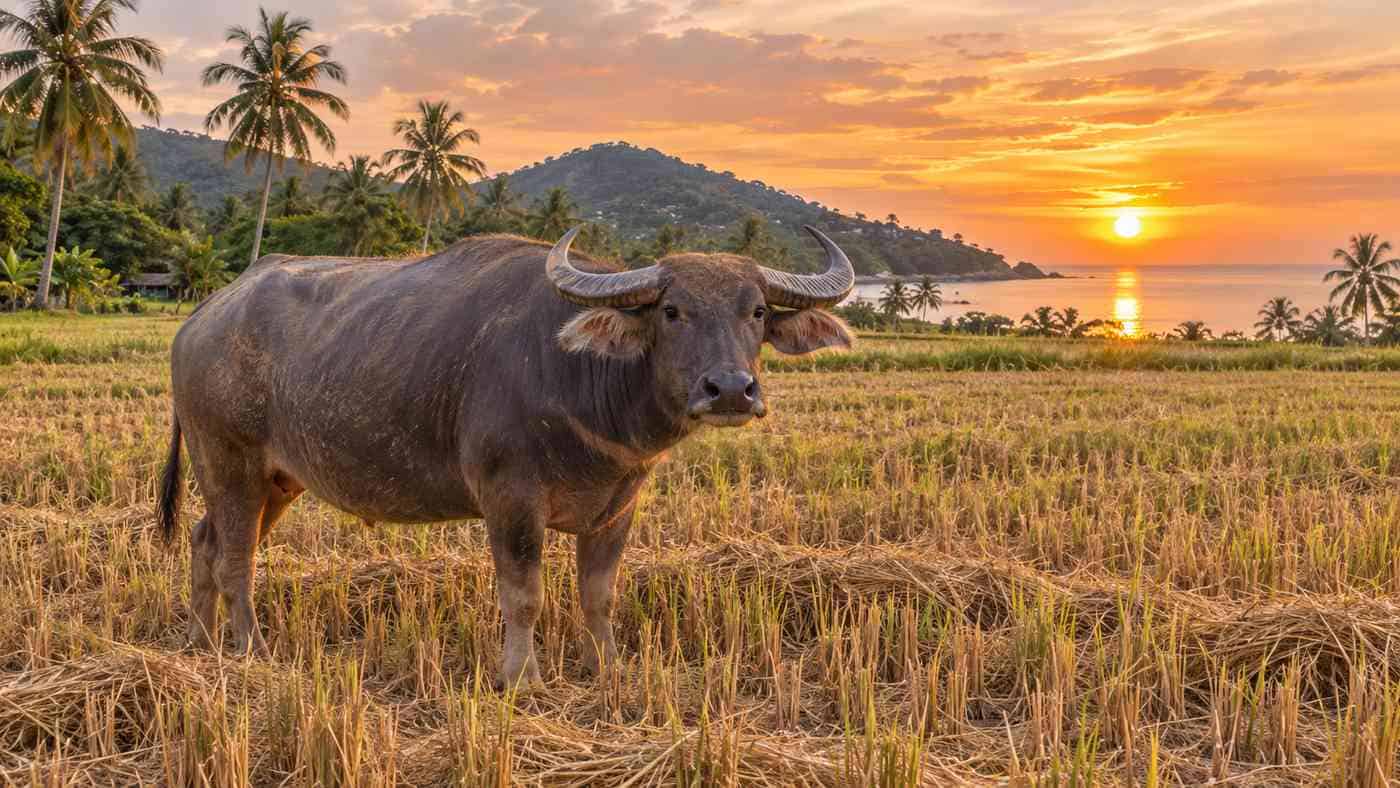
The municipality describes buffalo fighting as a sport particular to Samui. It says the sport was once played in other southern provinces but is now known in the south only on the island. In the past it was community entertainment after the harvest, held without much ceremony on any open ground, often a cleared rice field.
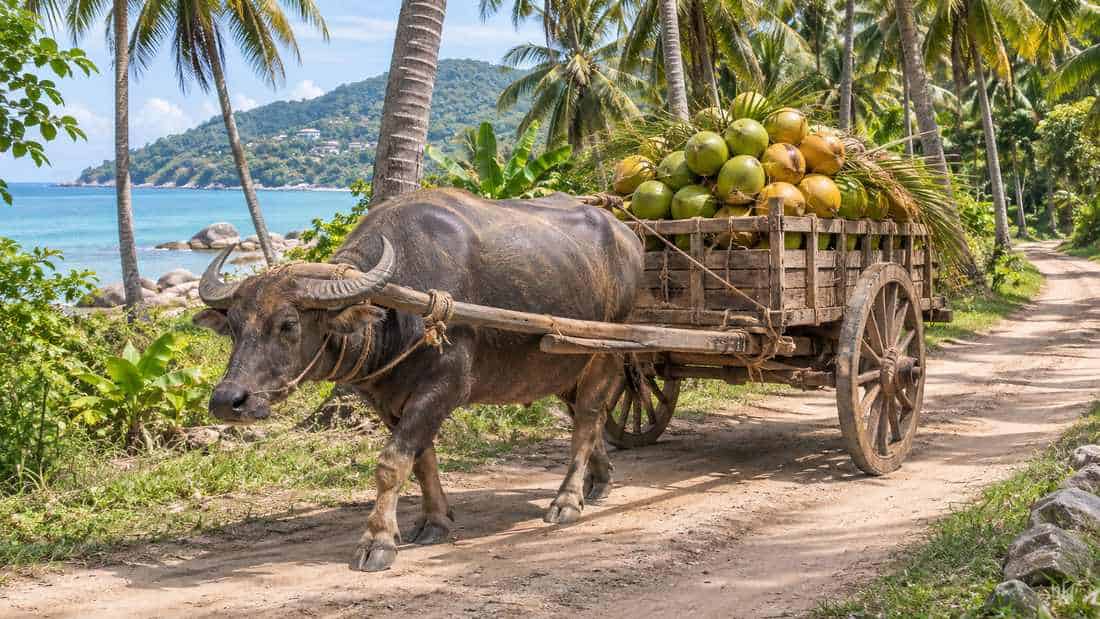
The water buffalo was a working animal on Samui long before tourism. National Geographic Thailand notes that buffalo were used to haul coconuts on the island, whose economy rested on coconut plantations started by Hainanese settlers in the 19th century, according to Wikipedia. Pitting two strong bulls against each other was a natural show of pride for farming families.
How the sport changed
The municipality says the sport has changed a great deal. Buffalo are now bred and raised specifically to fight, rather than being farm animals that fought after the harvest. Betting became part of the event, and fights moved from open fields into rings (bon). Today contests are arranged as individual matches from time to time, in a way the municipality compares with southern Thai bullfighting.
A 2019 paper by Thanakorn Thongnui and colleagues, presented at a Hatyai University conference, studied the custom through interviews on the island. It found that villagers kept buffalo to plough rice fields and pull carts, and that after the harvest they set them to fight in the fields or coconut groves for fun. National Geographic Thailand adds that a matched pair is often kept at the ring for about a month before a fight, with a team of handlers watching over them.
How fights are matched and prepared
Before a fight, owners bring their buffalo to be matched (priap), so that neither side is badly outclassed. The owners then agree the stake, which depends on each animal’s reputation. The municipality lists traditional beliefs about what makes a good fighter. A black buffalo should have a long tail, a white buffalo a short tail and short ankles, and a fighter should have taut skin, a broad nose and a sweaty hide. Solid black animals are thought clever and enduring. Red ones are less favoured because they are not thought to look fierce.
Owners train their animals like boxers: morning runs, exercise, practice bouts and a controlled diet. The day before a fight, the buffalo goes through the tham khwai ritual at the owner’s home or another auspicious place, led by a ritual specialist. Outsiders are kept away for fear of black magic, and the specialist blesses the animal’s food at every meal.
What happens on fight day?
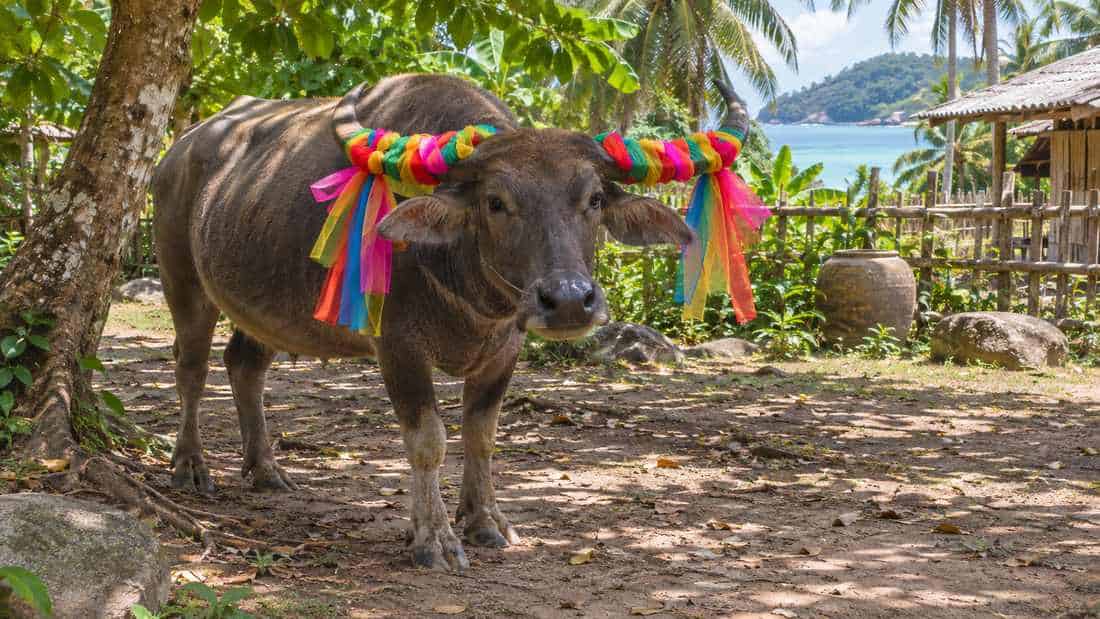
The two bulls are led into the ring and released to charge, lock horns and push. National Geographic Thailand describes a white cloth used to keep the animals apart before the start. The fight ends when one buffalo turns and runs, which may take seconds or many minutes. The magazine quotes the saying “ten minutes of fighting, two months of rest”: a buffalo needs a long break between contests. Wikivoyage describes animals decorated with ribbons and gold leaf and sprinkled with holy water before they enter the ring.

When and where fights are held
There is no published calendar. Fights are traditionally held on special occasions, especially New Year and Songkran in April, and news usually spreads by word of mouth. Most spectators are Samui residents, though the municipality notes that tourists who hear about a fight also come to watch. If you want to go, ask locally a few days ahead, and remember that many people regard the sport as cruel.

Is buffalo fighting cruel or illegal?
Views are split. The municipality’s own page says some people see the sport as cruel to animals, while others value it as a traditional pastime. Unlike Spanish bullfighting, the animals are not deliberately killed, and fights end when one buffalo retreats. Injuries can still happen. Thailand’s first animal welfare law, the Cruelty Prevention and Welfare of Animal Act of 2014, still permits animal fighting according to local custom, says Wikipedia’s article on animal welfare in Thailand, which gives cockfighting as an example.
Gambling is a different matter. The municipality says plainly that betting on the fights is morally wrong and illegal, and that it will not make you rich. Visitors should never place a bet.
Key takeaways
- Buffalo fighting (chon khwai) is a Samui tradition that began as a pastime after the rice harvest.
- Animals are matched (priap) and ritually prepared (tham khwai) before a fight.
- A fight ends when one buffalo turns away, and the animals rest for weeks between bouts.
- There is no fixed schedule. Fights tend to happen around New Year and Songkran.
- Betting is illegal, and the welfare of the animals is widely debated.
For festival dates that often coincide with fights, see our guide to the best time to visit Koh Samui. For other ways to see island culture, read our guide to Samui’s history and culture or our guide to Koh Samui’s temples.
Common questions
Is buffalo fighting still held on Koh Samui?
Yes. The Koh Samui city municipality describes it as a living local tradition, with matches held from time to time, especially around New Year and Songkran.
Do the buffalo get killed?
No. The fight ends when one animal turns and runs, and the buffalo are not killed. Injuries can still happen, which is why many people object to the sport.
Can tourists watch buffalo fighting?
Tourists do sometimes attend, but there is no official schedule or ticket office. Many people object to it on welfare grounds, and betting is illegal.
Why do Samui people keep fighting buffalo?
For owners it is a matter of tradition, pride and status, and a successful buffalo is valuable. It is also a social event for the local community.
How long does a buffalo fight last?
It can last a few seconds or many minutes, until one animal gives up. Owners then rest their buffalo for weeks before it fights again.
How we put this together: the description of origins, matching, rituals and the legal note comes from the Koh Samui city municipality’s Thai-language page, which we translated. Fight-day details come from National Geographic Thailand and Wikivoyage, and background from Wikipedia, all read in November 2026. We have not attended a fight for this article.
Sources
- Koh Samui city municipality: buffalo fighting (Thai)
- Koh Samui city municipality: local traditions (Thai)
- National Geographic Thailand: Samui buffalo fighting (Thai)
- Wikivoyage: Ko Samui
- Wikipedia: Ko Samui
- Wikipedia: Animal welfare in Thailand
- Thanakorn Thongnui et al., Buffalo Fighting: Local traditions of Koh Samui People (Hatyai University, 2019, Thai)